
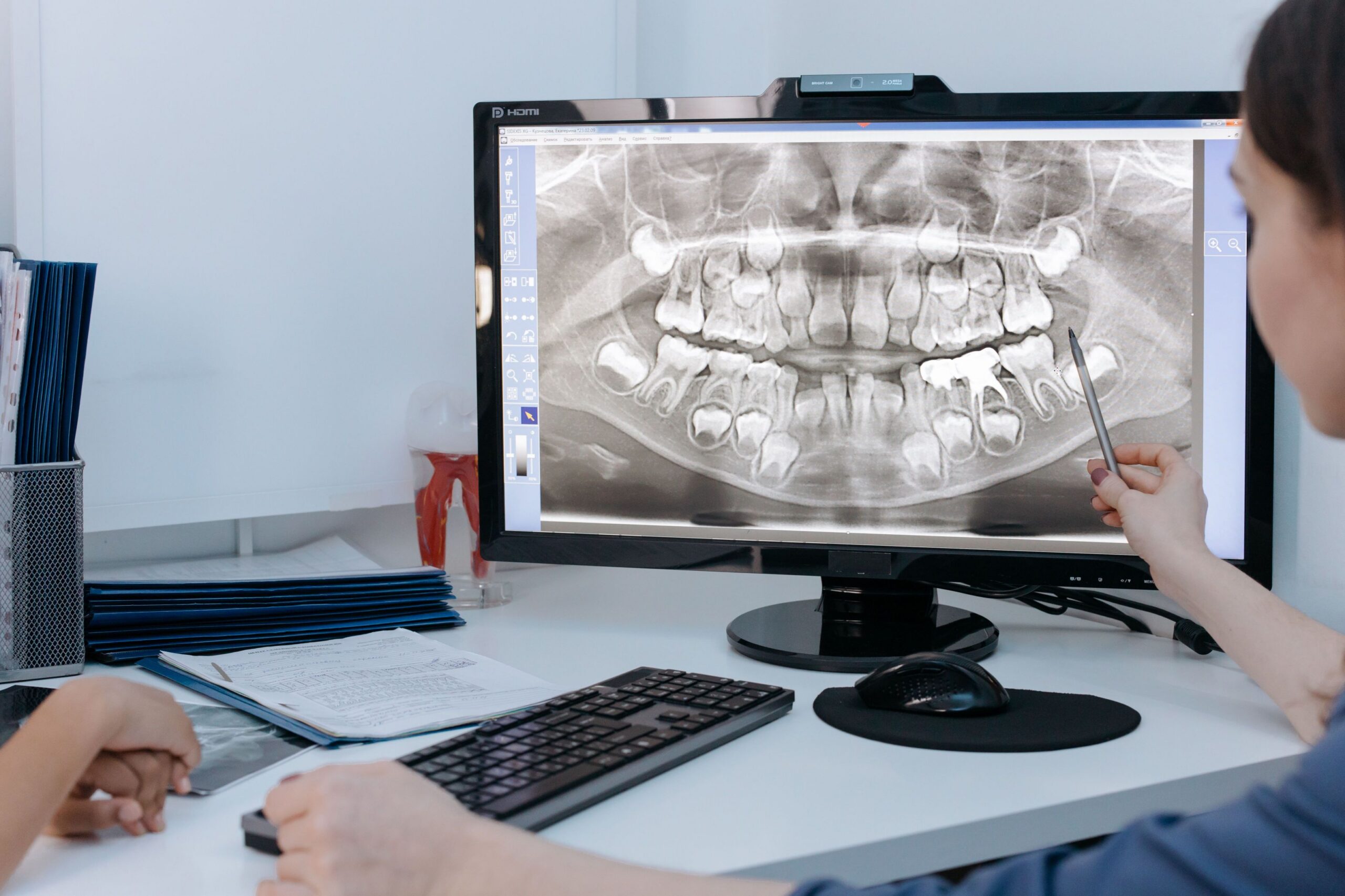
If your child’s dentist recommends dental X-rays, it’s natural to wonder whether they’re really necessary. After all, children are smaller, their bodies are still developing, and you may have heard concerns about radiation exposure.
The good news is that dental X-rays use very small amounts of radiation, and modern digital technology has made the process even more efficient. When X-rays are recommended for a child, the goal is to gather information that can’t be seen during a regular visual examination.
For growing children, these images can be an important part of identifying dental problems early and keeping their tiny teeth healthy.
Are Dental X-Rays Safe for Children?
Yes. Dental X-rays are generally considered safe for children when they are medically necessary and performed using appropriate precautions.
Dental X-rays use a very small dose of radiation. Modern digital X-ray systems require significantly less radiation than older film-based systems, and dental professionals use techniques designed to limit exposure.
Dentists also follow the principle of taking X-rays only when they are needed to diagnose or monitor a dental concern. Your child does not necessarily need X-rays at every dental appointment.
In other words, the question isn’t simply whether X-rays are safe. It’s whether an X-ray provides useful information that outweighs the very small amount of radiation involved. Your child’s dentist considers their age, dental development, oral health, and risk factors when making that decision.
Why Does My Child Need Dental X-Rays?
A visual examination can tell a dentist a lot about your child’s oral health, but there are areas that cannot be seen just by looking inside the mouth.
Dental X-rays can help identify:
- Cavities between teeth
- Decay beneath existing fillings
- Problems developing below the gumline
- Permanent teeth that have not erupted normally
- Missing or extra teeth
- Changes in the jaw and surrounding bone
- Dental infections or abnormalities
- Problems with tooth development
This can be particularly important for children because their mouths are constantly changing. Permanent teeth are developing beneath baby teeth, jaws are growing, and teeth are gradually moving into position.
An X-ray can give a dentist a view beneath the surface that simply isn’t possible during a visual examination.
When Are X-Rays Recommended for Children?
There isn’t one universal schedule that says every child should receive dental X-rays at a specific age or at every visit.
Instead, dentists consider the individual child’s needs. X-rays may be recommended when a child has a higher risk of cavities, symptoms that need further investigation, a history of dental problems, or developing teeth that need to be evaluated.
For example, bitewing X-rays are commonly used to look for cavities between the teeth. These areas can be particularly difficult to examine visually, even when a child is cooperative.
Other types of dental X-rays provide a broader view of the mouth and may be useful when a dentist needs to evaluate tooth development, eruption patterns, or the jaw.
A Las Vegas pediatric dentist can determine which type of X-ray, if any, is appropriate based on your child’s age and dental development.
How Do Modern Dental X-Rays Minimize Radiation Exposure?
Today’s dental offices use technology and safety practices designed to keep radiation exposure as low as reasonably achievable.
Digital X-rays are one important improvement. Digital sensors are highly sensitive and can produce detailed images using a relatively small amount of radiation.
Dental professionals also carefully position the equipment so that the X-ray beam is focused on the area being examined. Protective equipment may be used when appropriate, and the number of images taken is limited to what is needed for diagnosis.
The goal is simple: get the information needed while minimizing unnecessary exposure.
Parents can also feel comfortable asking why an X-ray is being recommended. A good dental team should be able to explain what the image will help them see and why it is useful for your child’s pediatric dental care.
Are X-Rays Necessary If My Child’s Teeth Look Healthy?
Sometimes, yes.
A child’s teeth can look healthy on the outside while developing decay between them or another problem beneath the surface. This is one reason dental X-rays can be valuable as part of preventive care.
For example, a cavity between two teeth may not be visible during a routine examination. An X-ray may detect the problem while it is still relatively small, allowing the dentist to address it before it progresses.
X-rays aren’t intended to replace a visual examination. Instead, they provide another piece of information that helps a dentist build a more complete picture of your child’s oral health.
How Often Should Children Have Dental X-Rays?
The answer depends on the child. The American Academy of Pediatric Dentists recommends that the frequency of dental X-rays should be determined by the child’s specific dental health needs, risk factors, and previous dental history. They base this on the ALARA (As Low As Reasonably Achievable) principle, which aims to minimize radiation exposure while ensuring adequate collection of diagnostic information.
Children who have a history of cavities or other dental concerns may need X-rays more frequently than children with consistently healthy teeth. A child who is just beginning to lose baby teeth may need different imaging than an older child whose permanent teeth have mostly erupted.
Rather than following a one-size-fits-all schedule, dentists consider factors such as:
- Your child’s age and stage of dental development
- Current oral health
- History of cavities
- Risk of developing tooth decay
- Previous dental treatment
- Symptoms or areas of concern
- Whether a particular area needs to be monitored
This individualized approach helps prevent unnecessary X-rays while still giving the dentist the information needed to provide appropriate care.
Why Are X-Rays Important for Preventive Dental Care?
Preventive dentistry isn’t just about treating problems after they become noticeable. It’s also about identifying potential problems early.
Dental X-rays can help a dentist discover decay before it causes pain, monitor how permanent teeth are developing, and identify issues that may affect your child’s oral health in the future.
For parents, that early information can be valuable. Finding a small cavity is generally preferable to discovering a larger one after your child develops significant pain or an infection. For more information, consider reading: How Can I Tell if My Child Has a Cavity?
X-rays can also help dentists make better decisions about treatment. Rather than guessing what’s happening beneath the surface, they can use the images along with an examination and your child’s dental history to determine the most appropriate next step.
What Should Parents Ask About Dental X-Rays?
If you’re unsure why your child needs an X-ray, it’s perfectly reasonable to ask. Your dentist should be able to explain what they’re looking for and how the results could affect your child’s care.
You might ask:
- What are you looking for with this X-ray?
- Is there a specific concern that prompted it?
- How will the results affect treatment?
- Does my child need this X-ray today?
- How often will my child need dental X-rays?
Open communication can help you feel more comfortable with your child’s dental care and understand why certain diagnostic tools are recommended.
Looking Beneath the Surface
Dental X-rays are an important diagnostic tool in children’s dentistry, and modern technology allows dentists to obtain detailed images while using very low levels of radiation. They aren’t necessary at every visit, but when recommended, they can reveal cavities, tooth-development concerns, and other problems that aren’t visible during a routine examination.
Regular childrens dental care combines visual examinations, preventive treatments, healthy habits, and diagnostic tools such as X-rays when they’re appropriate. Together, these tools help your child’s dentist monitor their changing mouth and address problems before they become more serious.
If you have questions about whether your child needs an X-ray, talk with your pediatric dental provider. Understanding what the image is intended to show can make the process much less intimidating for both you and your child.
